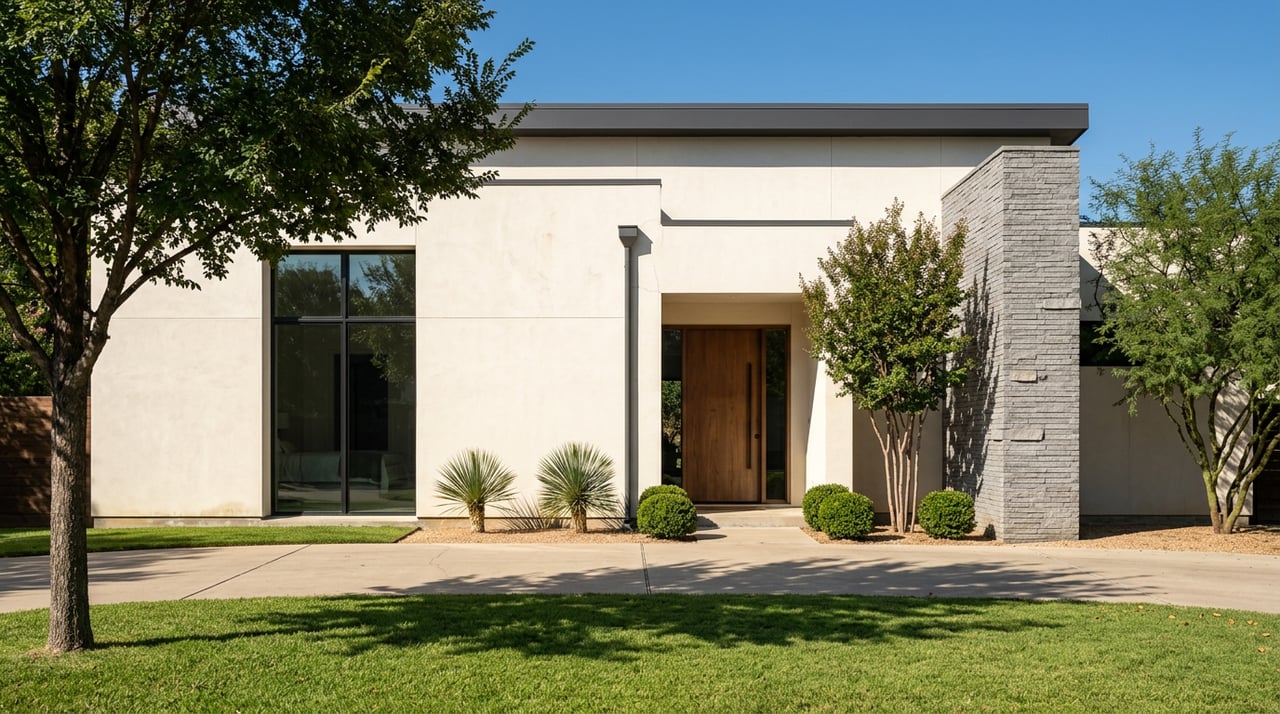
What Country Club Hills Actually Buys You In 2026 That New Summerlin West Doesn't
August 6, 2026
August 6, 2026
A buyer walks two properties on the same Saturday. The first is a 4,200 square foot Christopher Homes single-story on Glenview inside the Country Club Hills guard gate, backing to the ninth fairway at TPC Summerlin, listed in the low $2 millions. The second is a 4,300 square foot Toll Brothers detached in Redpoint Village, twenty minutes west, with a similar sticker after the builder's buydown. On the drive home the buyer asks the reasonable question: which one is priced correctly? The answer is that neither is, because neither price is a single number.
The first transaction problem is an appraisal problem. Country Club Hills is a closed community of roughly 177 homes, most built between 1993 and 1999 by the same builder, with floor plans from 3,100 to more than 6,000 square feet. That means the appraiser's comp set is small, aged in a specific way, and heavily weighted by which side of Glenview Street the subject sits on, since the even-numbered addresses hold the TPC Summerlin frontage. A resale in Redpoint Village or Kestrel Commons has the opposite problem: the appraiser is looking at builder-controlled comps that include incentive-loaded transactions where the recorded price does not reflect the rate buydown, closing credit, or design-center allowance the buyer actually received.
Both directions produce disputes at contract, and both are solvable. But the disputes tell you something about the underlying assets. In Country Club Hills, you are pricing a scarce, illiquid, view-anchored land position with a house sitting on top. In new Summerlin West, you are pricing a house with a rate structure sitting on top of a lot the market has not yet re-traded.
Every home price is three prices layered together: what the dirt is worth, what the structure is worth today, and what it will cost you to bring the structure to your standard over the hold. Buyers who cross-shop Country Club Hills against a new build almost never decompose these three lines, which is why the "obvious" comparison feels wrong on both sides.
| Line item | Country Club Hills | New Summerlin West |
|---|---|---|
| Typical lot | 9,000 sq ft to 3+ acres in The Enclave | 0.05 to 0.27 acres in Redpoint |
| Golf frontage available | TPC Summerlin, even-numbered Glenview | None comparable |
| Builder era | Christopher Homes, 1993–1999 | 2020–present, seven active builders |
| Gate structure | Guard-gated, master HOA plus sub-HOA near $381/mo combined | Gated in some sub-villages, no HOA in select Toll product |
| SID balance | Long since paid down | Elevated, newer infrastructure |
| Deferred systems capex | 25 to 30 year roofs, HVAC, pool equipment | None, with builder warranty |
Two of those rows favor Country Club Hills. Two favor new construction. The other two depend on the buyer.
Country Club Hills sits inside The Hills South village of Summerlin North, next to Village Center Circle and the Summerlin Library. What that address actually contains is difficult to reproduce anywhere the master plan is still building.
Compare that to what a similar dollar buys west of the 215. Redpoint Village detached single-family runs about $750,000 to $1.5 million plus for premium sites. Kestrel detached starts near $625,000 at roughly 3,000 feet of elevation. Toll Brothers Cordillera townhomes at Redpoint Square list from $577,000 to $750,000. Carmel Cliff at Redpoint delivers 2,851 to 4,577 square feet from the mid $700s. The finishes are current, the mechanicals are new, and the elevation offers Red Rock proximity. What the lot cannot do is deliver an established golf course view, because the golf-frontage inventory in Summerlin was substantially built out before Redpoint's 2020 groundbreak.
That is the first place the median lies. When a portal quotes Country Club Hills at a dollars-per-square-foot number close to a new Redpoint spec, the two numbers are describing different assets.
Christopher Homes built the community with high ceilings, sunken wet bars, large master suites, and semi-custom variation across three two-story plans and a single-story plan. That product held up because the underlying construction was serious. It also carries a real timeline. In 2026 the newest home in the community is roughly twenty-six years old and the oldest is closer to thirty-two.
A buyer's decomposition should include a specific reserve line for the systems the original build cannot outrun:
None of that is a defect. It is a cost line the appraisal does not carry and the listing does not print. A disciplined buyer models it at $150 to $400 per square foot of scope, phased over the hold, and treats it as part of the purchase price. Do that math and Country Club Hills either clears or fails the comparison on its own merits, not on the sticker.
New Summerlin West product ships with a rate structure attached. Taylor Morrison's 2026 buydown campaigns in the Redpoint area have opened with tiered rates starting at 2.99% in the first year, which pulls thousands of dollars a month out of the effective payment. Toll Brothers' national sales events layer additional credits on select move-in-ready inventory. Meanwhile, Special Improvement District assessments on the newer Summerlin West land tend to run higher than on established villages like Country Club Hills, because the infrastructure that the SID paid for is newer and less amortized.
The right comparison is not list price to list price. It is total cost of ownership to total cost of ownership, over a defined hold, with the buydown priced as a discount, the SID priced as an addition, and the Country Club Hills renovation reserve priced as capex that never appears in a builder disclosure.
Country Club Hills has no such incentive stack. What it has is a fully amortized master-plan position, a Summerlin master association fee near $47 per month plus a sub-HOA around $334, and comps that trade on their own fundamentals rather than on national builder promotions.
It prices at a premium against interior lots in the same community, but the premium narrows against a new build that has no frontage available at any price. The comparison the buyer should run is Glenview even-numbered against a Redpoint Village premium view lot, not against an interior spec.
Get a systems inspection scoped for original components, not a standard buyer's inspection. Ask the inspector to date the roof underlayment, HVAC units, water heaters, and pool equipment individually. A phased ten-year plan is more useful than a single lump-sum number at close.
The rate structures move quarterly with builder inventory pressure. A buyer with flexibility on move-in date can meaningfully improve the effective payment by timing to end-of-quarter builder targets, though the specific offer set changes.
Country Club Hills and Summerlin West are not competing for the same asset, even when the sticker suggests they are. If you would like the decomposition run against a specific listing, or a private walk-through of both sides of that Saturday tour, Kaylee Gallagher is available for a consultation and a current home valuation.
Stay up to date on the latest real estate trends.
Whether you’re buying or selling in Las Vegas or Henderson, Kaylee brings the experience, integrity, and insight to guide you with confidence and care. Work with her today!