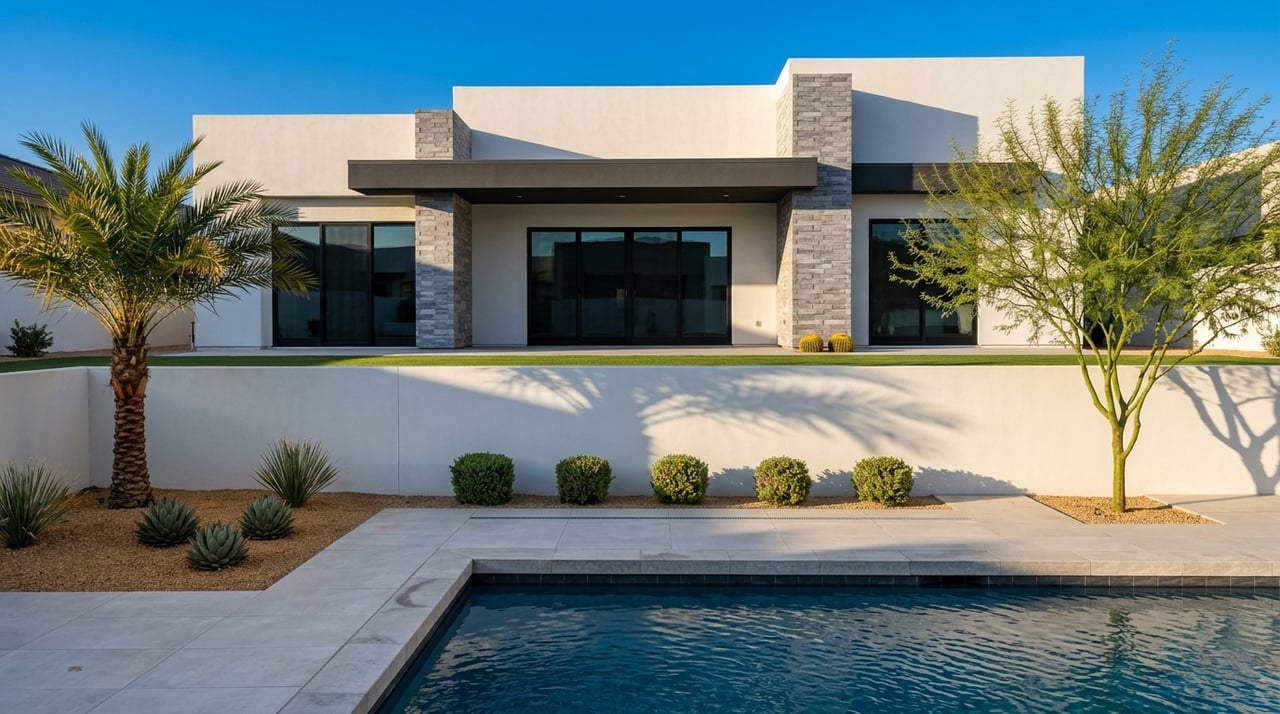
Country Club Hills Buyer’s Guide To Golf-Side Living
July 9, 2026
July 9, 2026
If you are drawn to the idea of waking up beside a championship golf course, Country Club Hills offers a very specific kind of Summerlin lifestyle. This is not just a neighborhood near a course. It is a guard-gated enclave built around golf, privacy, and a polished desert setting. If you are thinking about buying here, this guide will help you understand what daily life, ownership costs, and property tradeoffs can really look like. Let’s dive in.
Country Club Hills is an exclusive guard-gated community of 171 luxury homes surrounding TPC Summerlin in Las Vegas. TPC Summerlin is a private 18-hole, par-72 championship course measuring 7,243 yards, and the community sits within Summerlin, a 22,500-acre master-planned area with more than 100 parks and more than 150 miles of trails.
For many buyers, that combination is the real draw. You get a golf-centered address, but you are also part of a larger Summerlin setting with access to parks, trails, retail, and business centers. The location is also about 10 miles from the Strip and near Red Rock Canyon, which adds another layer to the lifestyle appeal.
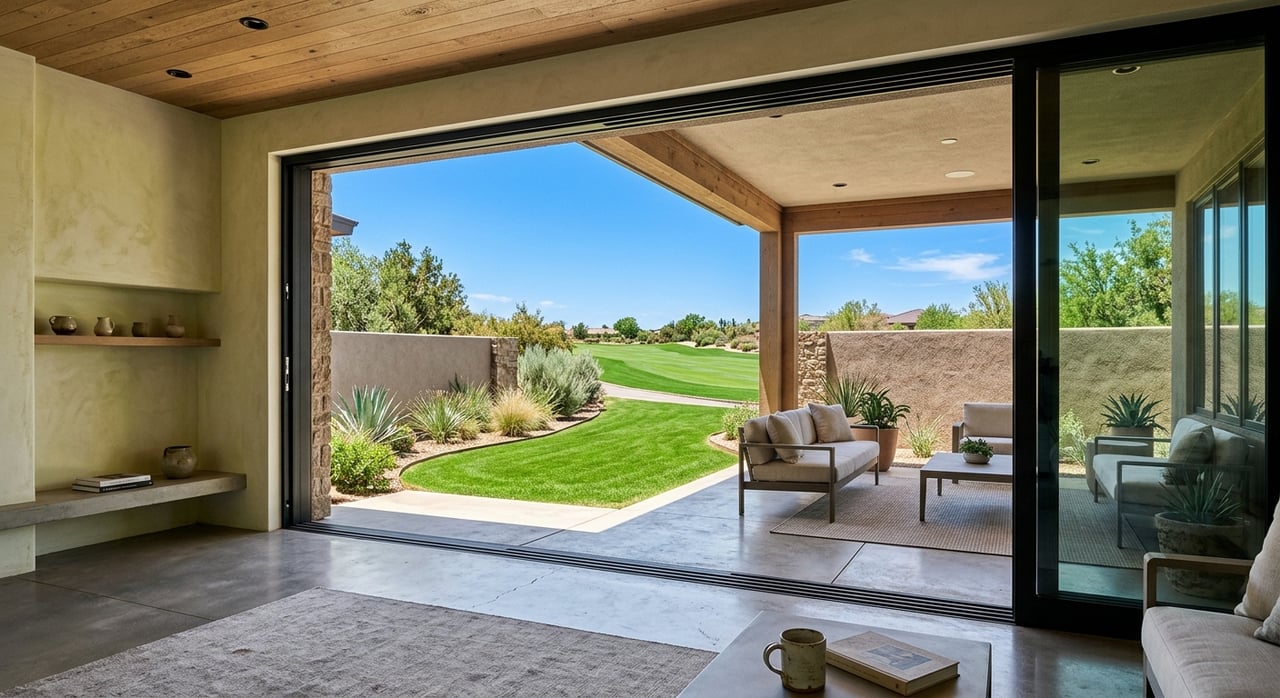
In Country Club Hills, golf is not simply a nearby amenity. It shapes the orientation of many homes, the views from outdoor spaces, and the feel of the streetscape. That can create a strong sense of openness, especially on lots with direct course frontage.
At the same time, buyers often want to balance views with privacy. In a community like this, the best home for you may not be the one with the most direct golf exposure. It may be the one that gives you the right mix of outlook, separation, and everyday comfort.
Public listing examples show homes positioned along the 11th, 12th, 14th, and 15th fairways, and some listings mention broader mountain-and-golf views. That suggests buyers in Country Club Hills may encounter several orientation types rather than one uniform lot pattern.
Because this is based on public listing data rather than an official lot map, it is smart to evaluate each property individually. In practice, most buyers are comparing four broad lot experiences.
Fairway-front homes often deliver the clearest golf views and the strongest connection to the course. If you picture long green sightlines from your backyard, this is usually the category that matches that vision.
The tradeoff is more exposure to course activity. Depending on the exact location, your outdoor areas may feel more open and more visible than a more sheltered lot.
Homes near a green or tee box can offer a different viewing experience. Instead of broader fairway depth, you may see more concentrated play activity and a different kind of view corridor.
For some buyers, that creates energy and visual interest. For others, it may feel more active than they want for a primary residence or second home.
Not every home in Country Club Hills sits directly on the course. Public listings suggest some homes trade direct frontage for broader views or a more tucked-away setting.
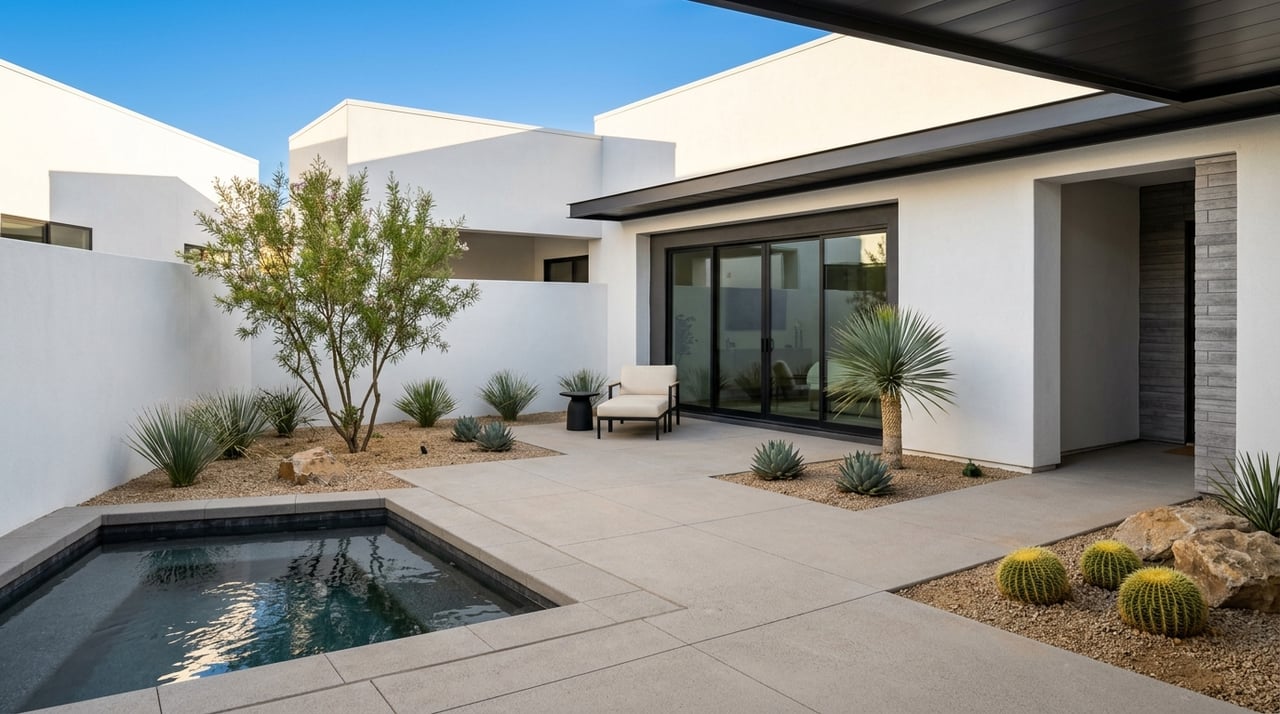
If privacy is a top priority, these homes may deserve a close look. You may give up some immediate golf presence, but you could gain a quieter and more enclosed outdoor experience.
Based on current listings and the community’s view-protection rules, elevated or corner lots may offer wider outlooks. In some cases, that can mean a more expansive visual connection to golf and surrounding mountains.
The flip side is that broader views can also come with greater visibility from neighbors or the course. In luxury communities, that balance matters more than many buyers expect.
Country Club Hills has design guidelines that reinforce how seriously the community treats privacy, safety, and neighbor impact. For example, privacy or safety screens may be added to gates or wrought iron fences if the paint matches, and golf-course lots must follow CC&R setback rules.
The guidelines also state that structural features may not adversely affect neighboring views, and exterior changes require neighbor-awareness forms. For a buyer, this means your enjoyment of a home is shaped not only by the lot today, but also by the community standards that help protect the look and feel over time.
When you buy in Country Club Hills, your monthly and annual carrying costs may include more than a mortgage and taxes. A realistic ownership budget usually includes the master HOA assessment, any neighborhood-level assessment, property taxes, insurance, pool and spa upkeep, irrigation and landscape service, and optional club dues if you want golf membership.
Summerlin North’s 2026 newsletter lists a monthly assessment of $74, a 2026 operating budget of $16,101,708, and a capital contribution fee of $444. Because Country Club Hills follows Summerlin North standards, buyers should verify the exact combined assessment for the specific parcel during escrow.
One of the most common buyer questions is whether living here requires club membership. It does not. Home ownership in Country Club Hills and membership at TPC Summerlin are separate.
TPC Summerlin describes its membership as non-equity, with multiple membership classes, and states that members are not assessed for golf-course or clubhouse improvements. If club access matters to you, it is worth reviewing membership options early in your search so you can plan your total lifestyle budget accurately.
In Clark County, real property is generally assessed at 35% of taxable value, and the Treasurer mails tax bills once per fiscal year. If the bill exceeds $100, taxes can be paid in installments.
Because tax rates vary by district, parcel-specific estimates are more useful than broad neighborhood averages. For luxury buyers, this is an important detail since even small differences in assessed value or district rates can affect annual carrying costs.
One of the biggest differences between simply liking the look of a golf-side home and truly enjoying ownership is understanding maintenance. In Country Club Hills, the conversation goes beyond curb appeal. It includes landscaping standards, irrigation performance, drainage, heat exposure, and exterior compliance.
The design rules require ARC approval for many exterior changes. They also require at least 40% drought-tolerant organic plant material when artificial turf is installed, prohibit mixed turf combinations, and state that drainage cannot be altered in a way that affects a neighboring lot.
The Summerlin North budget offers useful clues about ownership priorities in this area. It includes major spending for water and sewer, irrigation monitoring, landscape maintenance, mandatory turf conversion, and a large transfer to Summerlin Parks & Facilities and the Summerlin Council.
For buyers, that is a practical reminder that landscape and infrastructure upkeep are meaningful parts of the ownership profile. In a desert golf setting, systems matter just as much as finishes.
Southern Nevada Water Authority guidance says outdoor water use is the region’s biggest local conservation issue. It also notes that mandatory seasonal watering restrictions apply and that drip irrigation is preferred for desert landscapes because it delivers water more slowly and efficiently than sprinklers.
If you are buying a home with substantial landscaping or outdoor living areas, irrigation design deserves careful review. A beautiful yard is only part of the equation. You also want a setup that aligns with local water practices and supports long-term plant health.
As you compare homes, pay attention to:
These details can shape both your immediate costs and your long-term ease of ownership.
If you are serious about Country Club Hills, document review should happen early. The official Country Club Hills site maintains CC&Rs, ARC guidelines, approved plant lists, and forms. The Summerlin North page maintains assessments, reserve study information, budget materials, certificate of insurance, and resale-request documents.
For a buyer, these are not just administrative papers. They help you understand what you can change, what you are expected to maintain, and how the community manages its standards over time.
The best Country Club Hills purchase is rarely about square footage alone. It is about matching your priorities to the right lot orientation, view corridor, privacy level, and maintenance profile.
If you are design-minded, it also helps to look closely at how the home’s outdoor spaces relate to the course, the sun, and neighboring properties. In a community this specific, subtle differences from one parcel to the next can have a big effect on how the home lives day to day.
A thoughtful buying process should compare not only price and finishes, but also the practical side of ownership. That includes ARC restrictions, carrying costs, optional club expenses, and how much hands-on upkeep you want to take on.
If you want expert guidance as you evaluate golf-side homes in Summerlin, Kaylee Gallagher offers a boutique, design-aware approach that helps you weigh craftsmanship, lifestyle fit, and long-term value with confidence.
Stay up to date on the latest real estate trends.
Whether you’re buying or selling in Las Vegas or Henderson, Kaylee brings the experience, integrity, and insight to guide you with confidence and care. Work with her today!