Eagle Hills vs. Country Club Hills: The Golf-Frontage Difference
September 17, 2026
September 17, 2026
Pull up two Eagle Hills listing descriptions from the same season and you'll find one calling it a golf course community with select homes offering TPC Summerlin frontage, and another stating flatly that Eagle Hills has no golf course lots at all. Both descriptions are still live on the internet right now. The descriptions differ on an important point: whether Eagle Hills has golf-course frontage. That distinction helps explain why Eagle Hills costs less than Country Club Hills, its neighbor one roundabout away, for homes that look nearly identical on a spec sheet.
If you're cross-shopping these two Hills South enclaves, that gap is worth understanding before you write an offer, because frontage is one factor a median-price comparison alone will not capture.
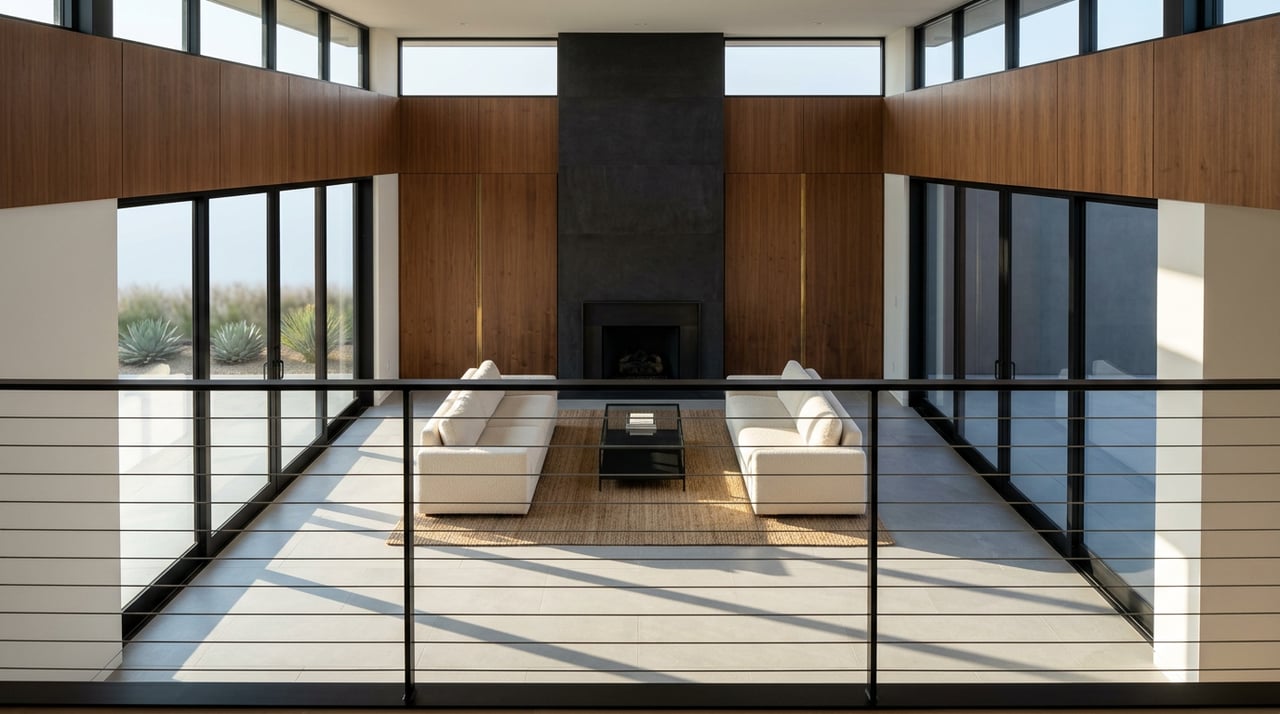
Eagle Hills and Country Club Hills sit close enough that you can walk between their guard gates. Both were built in the 1990s inside The Hills South village of Summerlin North. Country Club Hills is organized around TPC Summerlin, an 18-hole championship layout designed by Bobby Weed. Both offer 24-hour guarded entries, mature tree canopies, and the kind of quiet that makes both communities feel older and more settled than most of the valley.
Here is where they split. Country Club Hills was built with the course as its organizing feature. Many of its roughly 175 homes, constructed by Christopher Homes between 1993 and 1999, sit directly on TPC Summerlin fairways, and a secondary interior gate protects The Enclave, a stretch of just seven custom estates on lots running from 1.4 to more than 3 acres, every one of them fronting the course. Locals sometimes call that stretch Billionaire's Row.
Eagle Hills was not built around the course at all. It was built around its own private park, a 3-acre green space with tennis courts, a basketball court, and a walking trail that loops through the center of the neighborhood, with roughly 160 custom homes constructed between 1995 and 2000 arranged around that park rather than around a fairway. TPC Summerlin is a short walk from the back gate, not a backdrop from the primary lot. That distinction matters when comparing descriptions of the neighboring communities.
Frontage is not a cosmetic distinction. It shows up in dollars per square foot, and Summerlin's own market data makes the size of that gap explicit. A July 2026 analysis of the Greater Las Vegas Association of Realtors MLS feed found golf-frontage homes near Summerlin's TPC courses selling for roughly 21 to 33 percent more per square foot than comparable non-frontage homes in the same ZIP codes, a spread wide enough in one comparison to run $621 per square foot for frontage against $466 for non-frontage product just a few streets over.
That is the mechanism sitting underneath the price tags you'll see when you compare these two neighborhoods today. Eagle Hills listings have run from the $800,000s to a bit over $2.5 million depending on lot elevation and view, while Country Club Hills typically starts above $1 million and climbs well past $2 million before you even reach The Enclave's estate-scale pricing. Some of that gap is square footage and lot size. A meaningful piece of it is frontage, and Eagle Hills has no golf-course frontage on its primary lots.
| Eagle Hills | Country Club Hills | |
|---|---|---|
| Built | 1995 to 2000 | 1993 to 1999 |
| Homes | Roughly 160 | Roughly 175 |
| Builder | Multiple, mixed architecture | Christopher Homes, semi-custom |
| Golf frontage | None on the primary lots | Majority of homes, plus The Enclave |
| Organizing feature | Private 3-acre community park | TPC Summerlin fairways |
| Typical 2026 pricing | $800Ks to $2.5M+ | $1M+, higher in The Enclave |
The construction story adds a second layer to the price gap. Country Club Hills is a semi-custom neighborhood built almost entirely by one builder, Christopher Homes, which means the floor plans repeat with variations across the community. That consistency is part of what makes frontage lots there easy to compare against each other. Eagle Hills took a different path. Its homes were custom built to individual specification, which is why you'll find traditional East Coast styling next to Mediterranean influence next to the occasional Frank Lloyd Wright-inflected design within a few blocks of each other. That variety is part of the neighborhood's appeal for buyers who want a one-of-a-kind house, but it also means Eagle Hills comps require more legwork than a simple per-square-foot average, since no two homes were built off the same plan.
Every Summerlin address pays into a master association, and those fees changed at the start of this year. Summerlin North's master fee rose to $74 a month effective January 1, 2026, funding parks, trails, and community-wide programming through the Summerlin Council. That fee applies whether you buy in Eagle Hills, Country Club Hills, or a non-gated village across town. There's no version of Summerlin ownership that skips it.
On top of that master fee, Eagle Hills carries its own sub-association dues, which have run in the $435 to $536 a month range this year, putting combined monthly HOA costs for an Eagle Hills home under $700. That fee covers the guard gate, the private park's upkeep, and the neighborhood's landscaping standard. Country Club Hills carries a comparable structure of its own, layered on top of the same master fee, reflecting its own gate staffing and, for Enclave residents, an additional layer tied to that secondary interior gate.
Request the HOA package for both communities and compare the combined dues; HOA dues count against your debt-to-income ratio the same way a mortgage payment does. Comparing two homes at the same list price without comparing their combined HOA lines is comparing two different monthly budgets.
None of this makes one neighborhood better than the other. It makes them different products solving different priorities.
A buyer who wants to watch a competitive round from a back patio, or who plans to use TPC Summerlin access as a daily part of life, is paying for something real in Country Club Hills, and the premium reflects an asset the home actually has. A buyer who wants the guard-gated privacy, the mature landscaping, and walking distance to the same course, but doesn't need the fairway view attached to the deed, gets most of the lifestyle in Eagle Hills for meaningfully less. A buyer chasing architectural individuality over builder consistency will lean Eagle Hills almost by default, since Country Club Hills' semi-custom stock trades variety for comparability.
None of those buyers is wrong. The mistake is assuming the price difference between the two neighborhoods is just noise, when a documented piece of it is frontage, priced the way frontage is priced everywhere else in Summerlin.
Does any home in Eagle Hills actually front TPC Summerlin? Some marketing copy references golf-course frontage, but Eagle Hills has no golf-course frontage on its primary lots. The community was built around its own private park rather than the fairway, and TPC Summerlin is a short walk from the back gate; an individual property’s location is more informative than broad community descriptions.
Is the HOA difference between the two communities large enough to matter? It's large enough to change your qualifying numbers. A few hundred dollars a month in combined HOA dues, compounded over a 30-year mortgage, affects debt-to-income calculations the same way a rate difference would. Request the current HOA package for both communities before you compare two homes on price alone.
Which neighborhood appreciates faster? Neither community's appreciation is broken out separately in public data, and drawing that conclusion from a handful of recent sales would overstate what a small sample can tell you. What the frontage premium does establish is that the two communities are not interchangeable inventory, which matters more for planning your offer than a speculative appreciation forecast would.
If you're weighing Eagle Hills against Country Club Hills, or trying to figure out what a specific address is actually paying for, Kaylee Gallagher can walk the comps with you street by street and tell you which dollars are buying frontage and which are buying something else entirely. Schedule a consultation or request a home valuation to start with your specific address.
This article is general information, not legal, tax or financial advice. Consult a qualified professional about your situation.
Stay up to date on the latest real estate trends.

Whether you’re buying or selling in Las Vegas or Henderson, Kaylee brings the experience, integrity, and insight to guide you with confidence and care. Work with her today!